
Granite polishing and countertop restoration
Granite is the workhorse of natural stone, but years of traffic, cutting boards and harsh cleaners still flatten its polish. We bring back the deep, wet-looking color the slab had on installation day.
Because granite is harder than marble, it dulls slowly and evenly, which is why owners often don’t notice until the stone looks gray. On countertops the wear concentrates around the sink and prep areas; water marks ring the faucet, and the once-crisp reflection turns hazy. On floors, grit tracked underfoot acts like sandpaper in the traffic lanes. Miami’s hard water adds its own mark, ringing faucets with mineral haze faster than most owners expect.
That hardness cuts both ways: granite demands harder diamonds and more patience, but it rewards the work. We re-polish the surface through the full grit sequence until the feldspar and quartz read glassy again and the mineral color underneath comes back saturated. On kitchen surfaces the finish is food-safe, and we reseal on a schedule matched to how the surface is used. A well-sealed counter should bead water for years, not months.
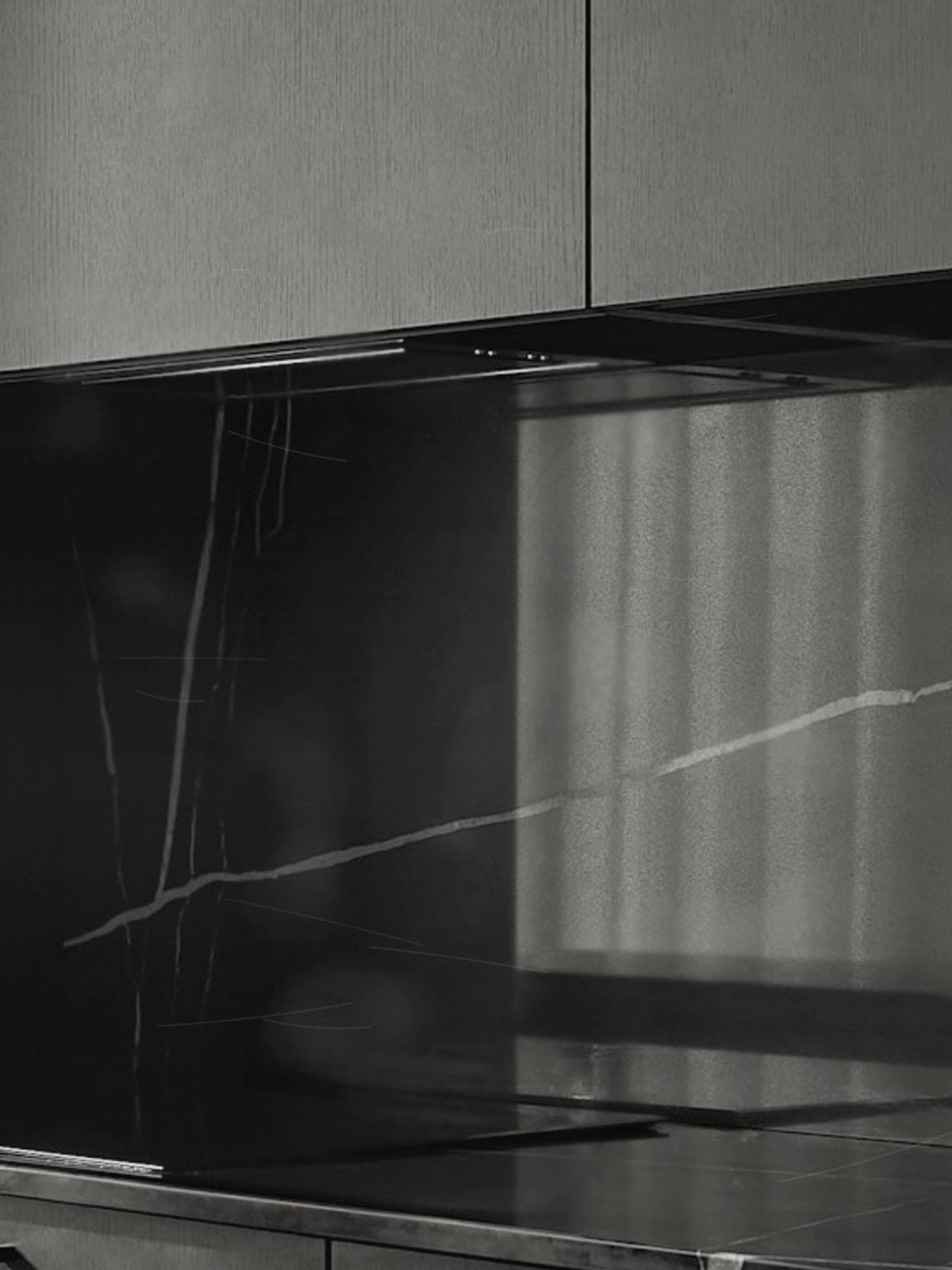
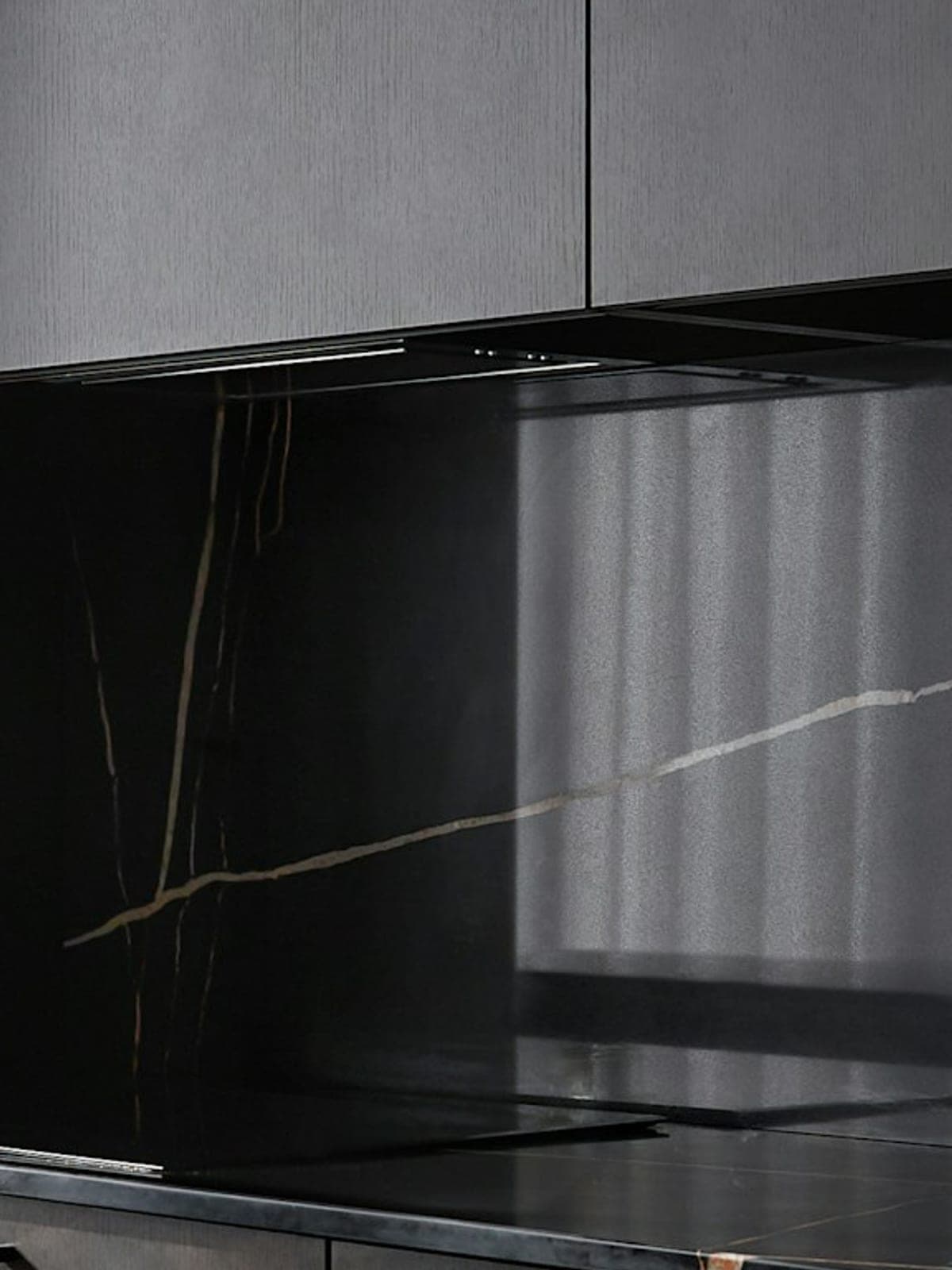
Wear and haze removal
Traffic lanes, cutting marks and cleaner haze are ground out with hard-bond diamonds, taking the surface back to bright, undamaged crystal.
Re-polishing
The full resin sequence rebuilds gloss step by step until the stone’s color reads deep and the reflection holds an edge. It is the finish granite owners remember from day one.
Sealing for daily use
We finish with a penetrating sealer chosen for the job the surface does: kitchen, bath or floor. Oil and water stay out of the pores and cleanup stays a wipe.
Common questions
Why does my granite look hazy?
Haze usually comes from hard-water minerals, soap film or a worn sealer, and sometimes from years of fine scratches. Polishing removes the buildup and micro-wear and restores the stone's deep color and gloss.
How often should granite be resealed in South Florida?
For kitchen counters in daily use, every one to two years is typical. The water test tells you: when water stops beading and starts darkening the stone, it is time.
Can chips in granite be repaired?
Yes. Small chips and dings are filled with color-matched epoxy and polished flush. Caught early, a repair is close to invisible.
Is polishing safe for food-prep surfaces?
Yes. We restore granite with abrasives rather than coatings, and the penetrating sealers we finish with are food-safe once cured.
Where we work
- Coral Gables
- Brickell
- Miami Beach
- Doral
- Aventura
- Miami Gardens
- North Miami
- North Miami Beach
- Miami Lakes
- Miami Shores
- Opa-locka
- Biscayne Park
- El Portal
- Sunny Isles Beach
- Key Biscayne
- Bal Harbour
- Surfside
- Bay Harbor Islands
- Golden Beach
- North Bay Village
- Indian Creek
- Hialeah
- Miami
- Coconut Grove
- Wynwood
- Westchester
- West Miami
- Sweetwater
- Tamiami
- Miami Springs
- Virginia Gardens
- Hialeah Gardens
- Medley
- Kendall
- Pinecrest
- Palmetto Bay
- South Miami
- Cutler Bay
- The Hammocks
- Homestead
- Florida City
Ready to see your stone again?
Tell us about the stone, the area and the finish you want. We’ll come see it, explain what it needs and leave you a clear, itemized estimate at no charge.
Request a free estimate